
By Lilly Crone
An all-female cast transformed Ernest E. Williams Theatre at Purdue University Fort Wayne on Friday night, Feb. 20, with a reimagined version of The Taming of the Shrew.
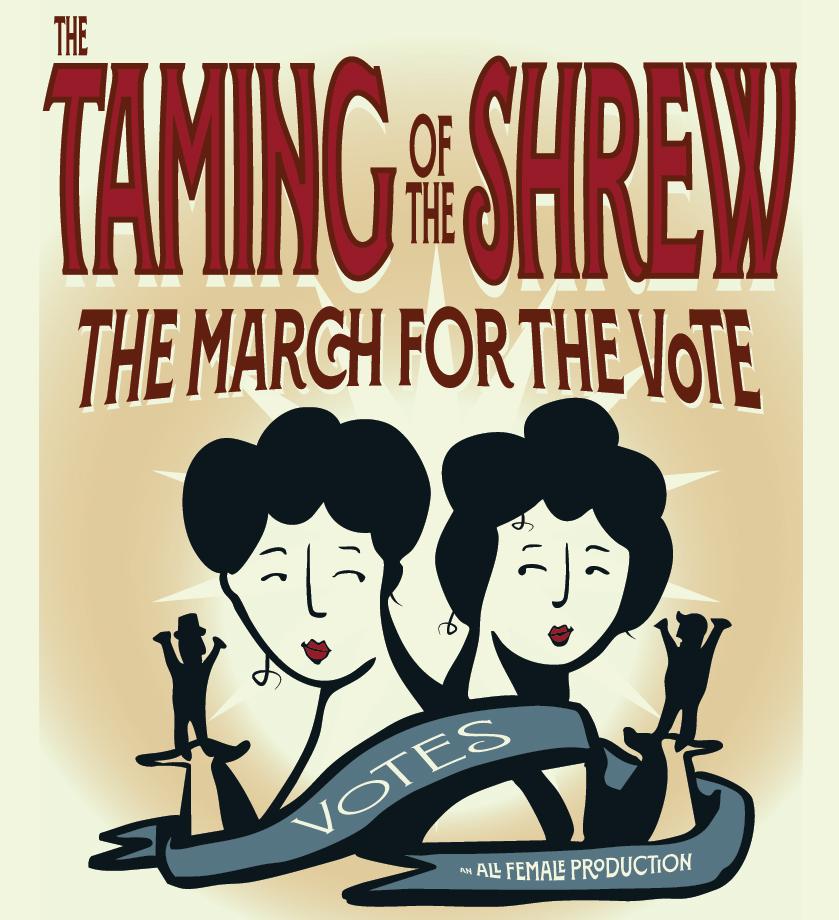
The Taming of the Shrew: The March for the Vote, set against the backdrop of the 1919 women’s suffrage movement in Chicago, blended Shakespeare’s original comedy with a historical framing device that placed the story inside a women’s social club rehearsing the play amid suffrage marches and social change. The layered approach created a performance that felt both classic and strikingly relevant.
The production drew students, faculty, and members of the local community.
In Shakespeare’s original play, suitors compete for the hand of Bianca while her outspoken sister Katherine must marry first. This adaptation reframed that narrative through conversations about women’s rights and autonomy, encouraging audiences to reconsider themes of obedience and gender roles through the lens of 1919.
Tailor Grant, the lead cast member, portrayed Mrs. Victoria Van Dyne, a shy but passionate supporter of women’s suffrage. She also stepped into the role of Petruchio during the Shakespearean portions of the performance, shifting between two sharply contrasting energies on stage.
“Being the lead in this specific performance feels really special to me,” Grant said. “My character, Mrs. Van Dyne, is very shy but passionate about suffrage, which is fun to explore because I’m not shy or quiet. I love that contrast.”
Grant said balancing the dual roles required careful attention to physicality and voice.
“It’s kind of a play within a play,” she said. “I really have to think about my body language and my voice and everything when I’m doing all of the acting for it.”
Throughout the performance, that contrast was evident. Grant transitioned from the reserved, thoughtful presence of Mrs. Van Dyne to the bold, commanding energy of Petruchio, reinforcing the production’s layered storytelling.
The cast spent approximately seven weeks preparing for the show. For Grant, the production marked her first experience performing Shakespeare.
“We started the process by learning how to read and perform Shakespeare because this is my first Shakespeare performance,” she said. “We broke down scenes and worked through them together.”
Rehearsals often extended late into the evening as the cast ran full performances. Grant described the process as demanding but rewarding.
“It’s a very big commitment, but it’s definitely paid off over time,” she said.
The suffrage-era setting added historical weight to the production. While Shakespeare’s original play has long sparked debate over its portrayal of women, the 1919 framing encouraged audiences to reflect on women’s political and social limitations during that period. The 19th Amendment, which granted women the right to vote nationally, would not be ratified until 1920.
Grant said she believes the themes remain relevant today.
“It’s about women finding their voices and standing up for what they believe in,” she said. “That definitely still resonates.”
As the curtain closed Friday night, the production left audiences entertained yet reflective, reconsidering a centuries-old comedy through the lens of women’s ongoing fight for equality.