All-Female Cast Brings Suffrage-Era Twist to “The Taming of the Shrew”

By Lilly Crone

An all-female cast transformed Ernest E. Williams Theatre at Purdue University Fort Wayne on Friday night, Feb. 20, with a reimagined version of The Taming of the Shrew.

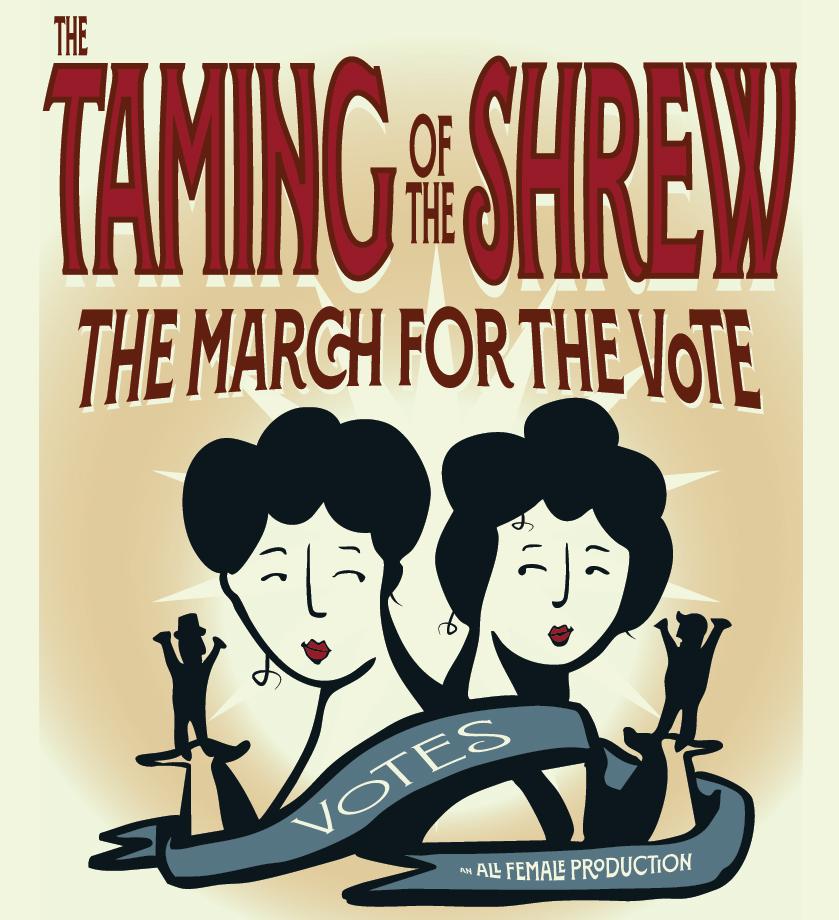
The Taming of the Shrew: The March for the Vote, set against the backdrop of the 1919 women’s suffrage movement in Chicago, blended Shakespeare’s original comedy with a historical framing device that placed the story inside a women’s social club rehearsing the play amid suffrage marches and social change. The layered approach created a performance that felt both classic and strikingly relevant.

The production drew students, faculty, and members of the local community.

In Shakespeare’s original play, suitors compete for the hand of Bianca while her outspoken sister Katherine must marry first. This adaptation reframed that narrative through conversations about women’s rights and autonomy, encouraging audiences to reconsider themes of obedience and gender roles through the lens of 1919.

Tailor Grant, the lead cast member, portrayed Mrs. Victoria Van Dyne, a shy but passionate supporter of women’s suffrage. She also stepped into the role of Petruchio during the Shakespearean portions of the performance, shifting between two sharply contrasting energies on stage.

“Being the lead in this specific performance feels really special to me,” Grant said. “My character, Mrs. Van Dyne, is very shy but passionate about suffrage, which is fun to explore because I’m not shy or quiet. I love that contrast.”

Grant said balancing the dual roles required careful attention to physicality and voice.

“It’s kind of a play within a play,” she said. “I really have to think about my body language and my voice and everything when I’m doing all of the acting for it.”

Throughout the performance, that contrast was evident. Grant transitioned from the reserved, thoughtful presence of Mrs. Van Dyne to the bold, commanding energy of Petruchio, reinforcing the production’s layered storytelling.

The cast spent approximately seven weeks preparing for the show. For Grant, the production marked her first experience performing Shakespeare.

“We started the process by learning how to read and perform Shakespeare because this is my first Shakespeare performance,” she said. “We broke down scenes and worked through them together.”

Rehearsals often extended late into the evening as the cast ran full performances. Grant described the process as demanding but rewarding.

“It’s a very big commitment, but it’s definitely paid off over time,” she said.

The suffrage-era setting added historical weight to the production. While Shakespeare’s original play has long sparked debate over its portrayal of women, the 1919 framing encouraged audiences to reflect on women’s political and social limitations during that period. The 19th Amendment, which granted women the right to vote nationally, would not be ratified until 1920.

Grant said she believes the themes remain relevant today.

“It’s about women finding their voices and standing up for what they believe in,” she said. “That definitely still resonates.”

As the curtain closed Friday night, the production left audiences entertained yet reflective, reconsidering a centuries-old comedy through the lens of women’s ongoing fight for equality.

A$AP Rocky Makes a Big Return with “Don’t Be Dumb,” but Was it Worth the Wait?

By Elijah Noggle, SCO Cultural Critic

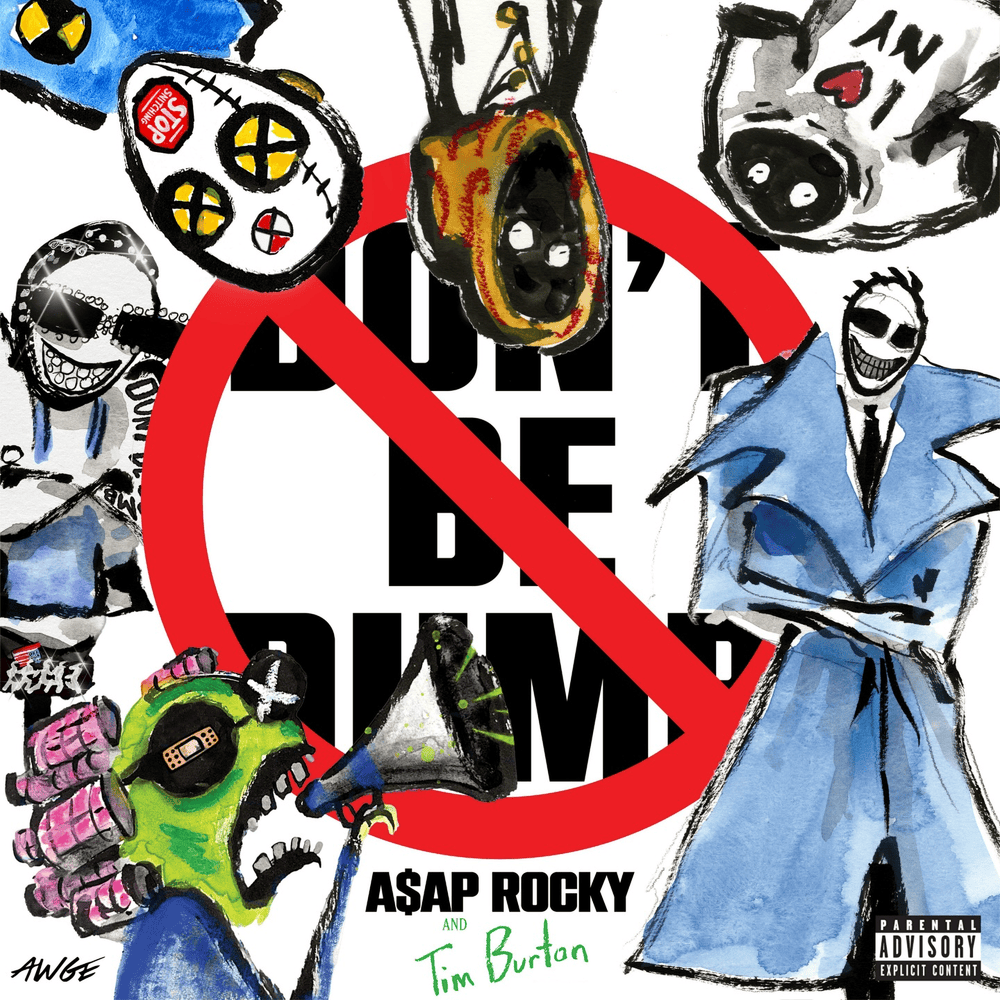
This year, A$AP Rocky, the beloved hip hop artist and one of the genre’s stand out figures of the past 15 years, finally released Don’t be Dumb, his long-awaited fifth album. It has been seven years since his last project, Testing, and the long gap created a lot of hype and high expectations. Let’s find out whether it makes up for the wait.

I want to start with the biggest positives. On his previous albums, people were drawn to the particular ear for production that Rocky seemed to have. This album is no different. Like his other projects, it does not fall into the category of “formulaic trap production” that a lot of this decade’s hip hop genre finds itself in.

There’s some really great experimentation, something you can find plenty of on his previous albums. “Punk Rocky,” with its indie rock guitars and mellow atmosphere, and “Robbery,” with its late-night jazz/lounge vibe with piano and saxophone are a couple of examples.

The features are a standout on the track list. They really elevate the quality of some of the songs. For example, rising star Doechii’s feature on the song “Robbery” is much more than a simple verse: the song contains her and Rocky trading off lines and their chemistry is really great, with their vocal deliveries both being rather subdued in a way that compliments each other.

Another example is from Tyler, the Creator on the song “Fish N Steak (What it is).” Any time Tyler has popped up on someone else’s album in the past few years, it has been one of my favorite moments. His energy and lyrics are some of the best in the hip hop genre right now.

This album finds its strength in variety. You have more experimental Rocky on songs like “Don’t Be Dumb,” you have the “high energy bangers” type of style on songs like “Helicopter,” and you have more moderate energy songs that still hit pretty hard, like “No Trespassing.”

Some favorites include “Stop Snitching,” which stood out with its clever use of sound effect sampling, memorable guest verse from relative unknown Sauce Walka, and really layered beat. Another standout is the aforementioned “Robbery”, and I hope this song wins some awards. By the end of the year, it will still remain one of the coolest and most unique songs of 2026.

There’s plenty of criticism to this long-awaited release, however. I don’t think Rocky’s lyrics on this album are particularly memorable. He has plenty of charisma and energy as a rapper, but I found myself way more connected to this album’s production than much of what was said on it. While Rocky has been known in the past for his really cool flow as a rapper, with great technical ability, I don’t think that aspect of his rapping is quite as good as it is on his previous albums.

The song I probably liked the least on this album was “STFU.” It tries too hard to be really crazy and high energy. It just sounded a little messy. I felt the vocal delivery by the guest rappers was clunky on this one, and some of the rapping just felt like it wasn’t on beat, which was odd.

To conclude this review, do I think this album was worth the wait? And does it live up to the quality of his previous albums? In my personal opinion, kind of. It’s pretty close, at least. There are very strong moments, but some songs drag on for a little long, and some of them are a tad bit forgettable. Overall, I don’t think it’s as good as his best records, but it’s a solid enough release that proves A$AP Rocky can still deliver.

I’m going to give this a solid 6.5/10. Teetering on a 7/10. It’s a really fun listen, despite some flaws. I really do recommend giving it a listen if you’re interested.

Discovering Middle-Earth for the First Time: A Newcomer’s Take on “The Fellowship of the Ring”

By Elijah Noggle, SCO Cultural Critic

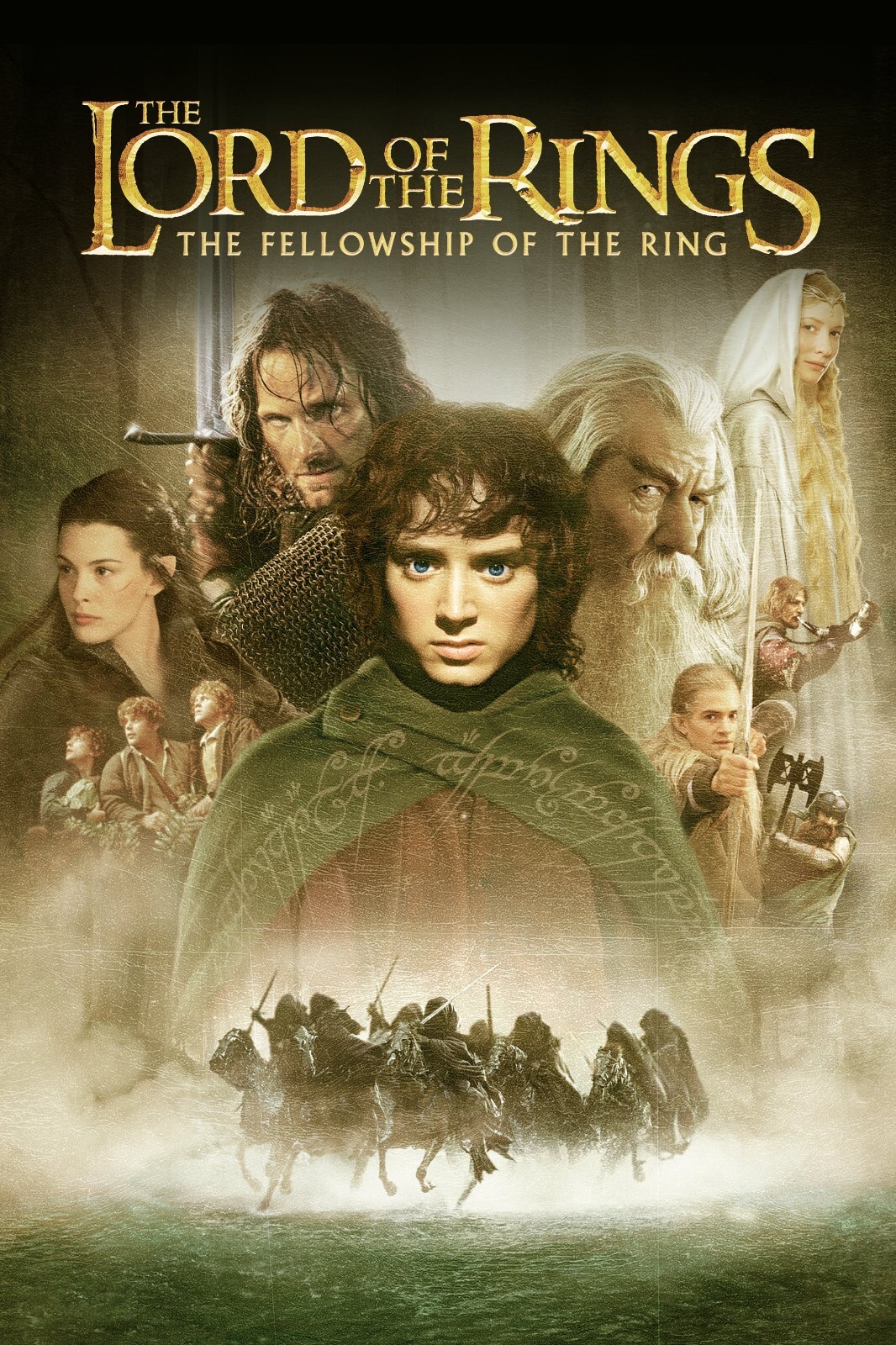
This past week, all three of Peter Jackson’s Lord of the Rings movies (the extended editions) were re-released in theaters worldwide. Surprisingly, I had never seen these films before, and have no nostalgia for this franchise at all. But I am intrigued by it. This felt like the perfect opportunity to finally experience this franchise in some way for the first time.

I decided to watch only the first movie because reviewing the entire trilogy in one go would be too massive of an undertaking, especially given that I’m relatively new to reviewing movies. Even so, I thought it would be interesting to take a look at The Fellowship of the Ring from the unique perspective of someone experiencing Tolkien’s world for the very first time.

As a new, fresh cinematic experience for me, I have to say this was absolutely incredible—magical, even. I was immediately in awe of the scenery, as I had heard a bit about the filming locations, but seeing them in motion was mesmerizing. Much of the first hour takes place in the Shire, home of the Hobbits, and many of my favorite aspects of the movie are introduced here.

The score, for example, is one of the most beautiful things I have ever heard. The end-credits theme, the themes that play in the Shire scenes, and the Rivendell motifs are all going on my sleep playlist for sure. It is an astounding achievement not just in film scoring but in music overall. The soundtrack transports you to the world of Middle-Earth just as effectively as the visuals do. Maybe even more so.

Experiencing Tolkien’s storytelling in any form for the first time was truly special. Of course, I don’t know which lines of dialogue are directly from the novel, but I thought the dialogue in this movie had a compelling earnestness to it, and was also genuinely poetic at times. Gandalf, in particular, delivers several moments of powerful “sage wisdom” that felt really impactful. Regardless of how much of the dialogue in this adaptation is Tolkien’s own words, I can really understand why people consider him one of the greatest writers of all time.  

I was also incredibly impressed that, despite this being the extended edition of The Fellowship of the Ring —clocking in at 3 hours and 28 minutes— it never felt like it dragged. I’ve seen extended cuts of movies before where the added content disrupts the pacing, but this version of Fellowship flowed perfectly for me.

Given that this is a film based on Tolkien’s novels, one of the most iconic works of high fantasy ever created, there’s plenty of larger-than life scenery and breath-taking action sequences in this film. My favorite was the final battle with the orcs in the forest. I love the camera work, special effects, and fight choreography on display in this sequence.

And [[SPOILERS AHEAD]] Boromir’s sacrifice was truly emotional and became one of my favorite moments in the film. Another standout scene was Gandalf fighting the Balrog. As a new viewer, getting to see the “You shall not pass!” moment on the big screen is something I will never forget. Both scenes are incredibly powerful and speak to how much of a cinematic achievement this film is.

To conclude, Peter Jackson’s version of The Lord of the Rings: The Fellowship of the Ring is a timeless film. Even as someone with zero nostalgia for the franchise, I found that it holds up one thousand percent. It’s an easy recommendation for anyone looking for a truly memorable viewing experience.