

By Andrew Danielson
For Jordan Cunningham, computer games aren’t just a means of relaxation. They are an intensive sport requiring concentration, teamwork, and careful organization.
“It’s so accessible for anyone,” Cunningham said. “You just need a computer.”
A graduate of the Indiana Institute of Technology with a degree in psychology, Cunningham is starting his second year as coach of the PFW Esports team.
But he brings a lot of experience to the table when it comes to gaming and coaching.
Prior to PFW, Cunningham has been both a competitive player of games such as “League of Legends,” as well as an Esports coach, serving as the coach for Indiana Tech’s Esports team.
There’s a lot that goes into running an Esports team, and that digital world is continuing to grow in popularity among universities across the globe, with Esports programs and arenas being installed at the Purdue West Lafayette campus, Purdue Northwest, and PFW.
Esports Originates at Home
Cunningham explained that Esports originated with enthusiastic League of Legends players when they held a tournament for the game in one of the player’s basements. From there, a formal, global tournament was held in 2011, and the world of Esports gaming was born.
Cunningham said that around the year 2016, Esports teams were beginning to pop up at various universities, with smaller colleges and STEM schools generally being the ones most interested in starting Esports teams.
“They started getting this idea of smaller schools can do something that bigger schools aren’t able to do,” Cunningham said.
He explained that bigger schools with high-level division athletics probably aren’t going to offer Esports. For smaller universities, Esports are a way they can offer students a team experience without the expenses entailed with more traditional team sports.
“The maintenance is so low,” Cunningham said.
Cunningham said that the Esports team at PFW is self-sufficient. Once the basic computer hardware and peripherals like computer mice, headphones, keyboards and software have been purchased, there largely is no maintenance to be done.
Esports – A Team Experience
Cunningham said that when he came to PFW as the Esports coach, one of his first tasks was to write a policy handbook for the team.
That manual is largely based off of the manuals in use by the traditional sports teams at PFW.
“I’m going to run this like an athletics team,” Cunningham said.
Esports team members have the same grade requirements as the other sports teams at PFW. If student grades begin falling, they are restricted from participating in tournaments and games.
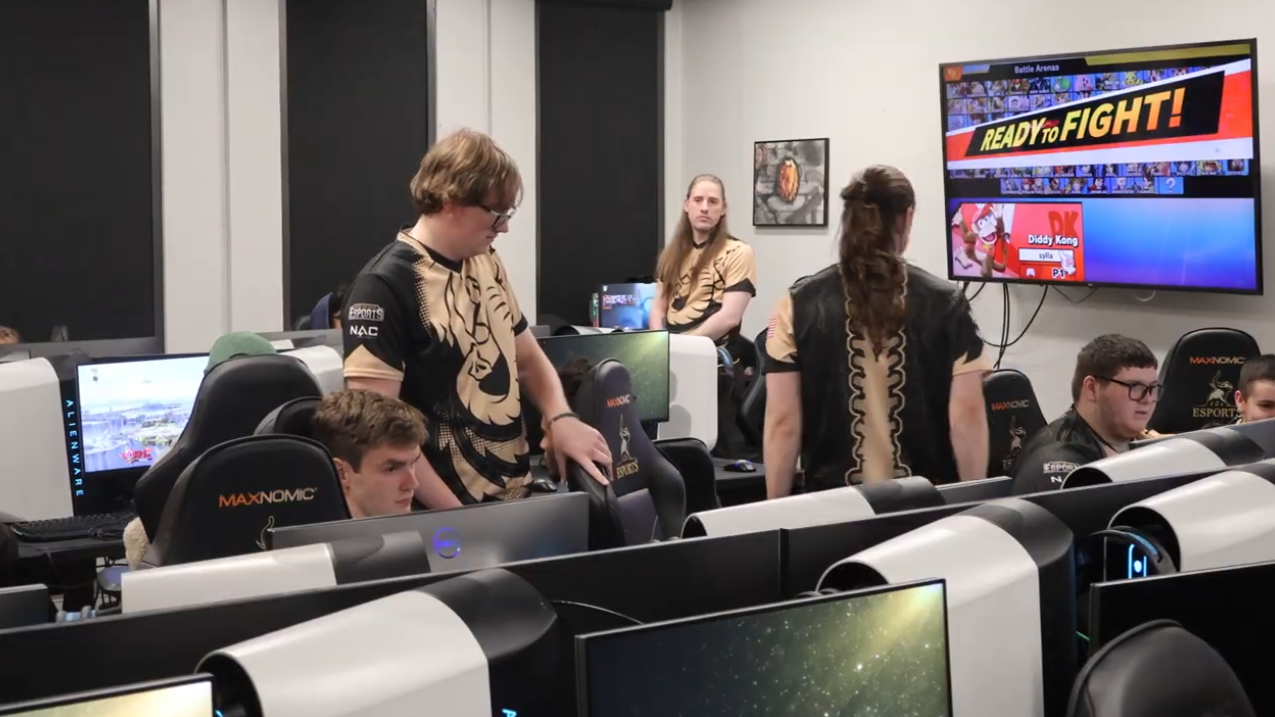
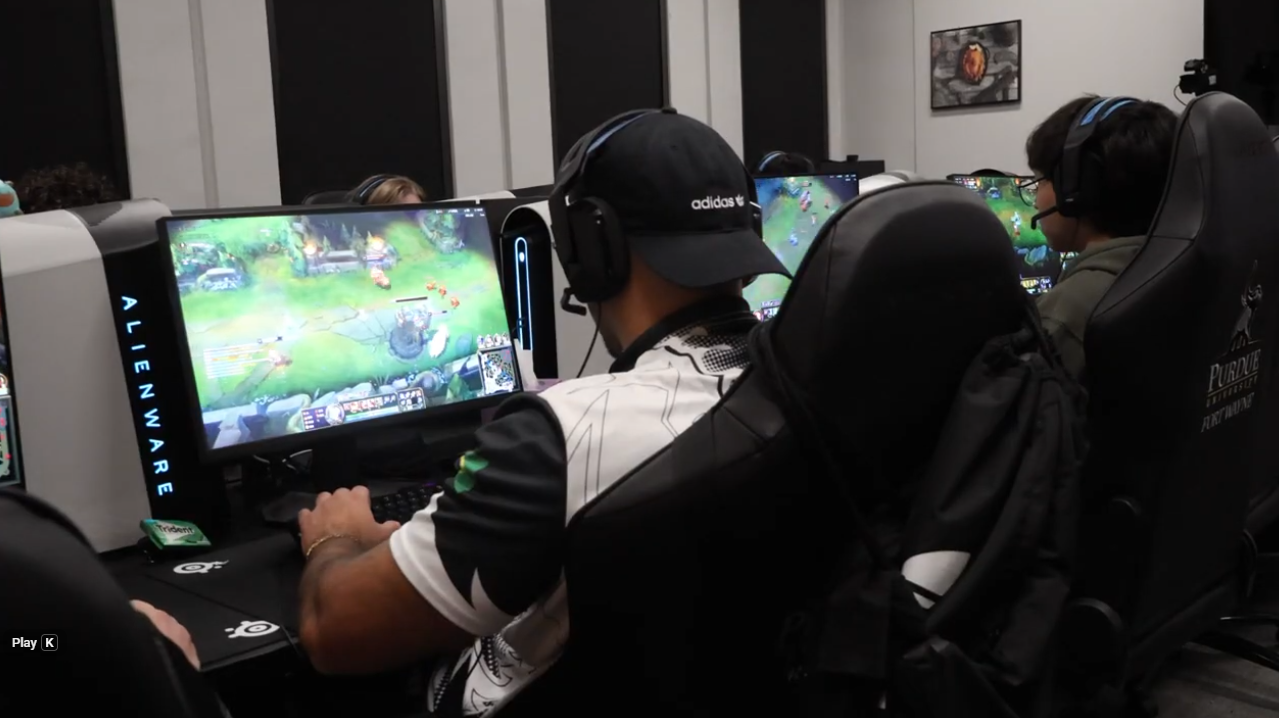
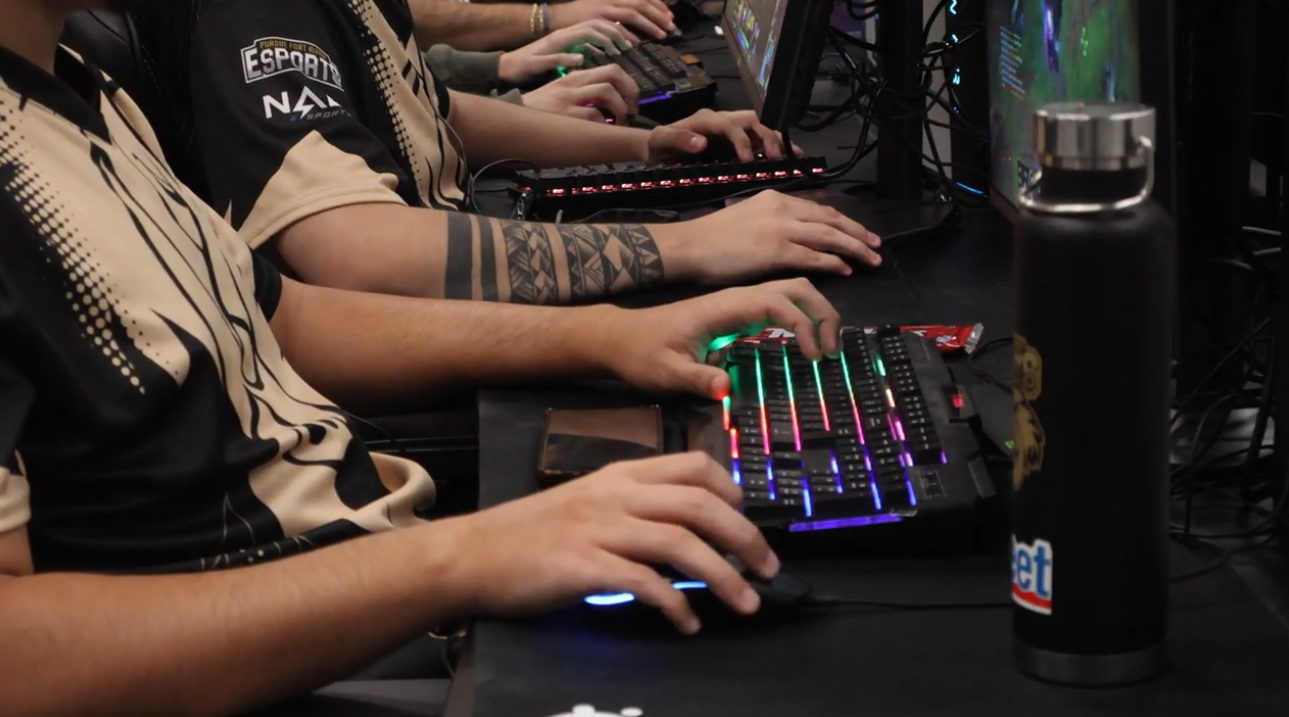
The Esports team mentality and camaraderie are reinforced in a variety of ways beyond grade requirements, including personal hygiene standards and practice sessions called “scrimmages” held once or twice a week. Scrimmages are simulated tournaments where Cunningham and his team play against other college teams in fake-tournament style competition, with each team trying out new tactics that they might use in the future.
Players on the team have the opportunity to travel to tournaments and stay the weekend. Such opportunities give the players the chance to both build team spirit with their fellow Dons and experience what it’s like to travel as a team to a competition.
Esports – Organized and Regimented
Cunningham explained that each player on the team has one game in which they specialize, such as Rocket League or Super Smash Bros. That speciality is the game at which the player is the most proficient and comfortable at playing. When that team member is playing their special game, they are competing in leagues and levels of comparably ranked players across the country.
If a player wants to play a different game in addition to their primary specialty, Cunningham will sometimes allow that player to be part of a lower-ranked team. That way, the player can maintain their skills in their primary game but also have the chance to play something else.
Cunningham said that each game, called a “title,” has its own days when competitions are held. For example, the Rocket League team will play on one particular day, while the Super Smash Bros team may play on a different day.
When it comes to what titles the PFW Esports team plays, there are several criteria that must be met.
“I’m interested in what the students are interested in,” he said.
If students are interested in playing a particular title, Cunningham will investigate and see if that title is worth the time and effort needed for a dedicated team for that game.
But the biggest factor deciding what titles are played by PFW’s Esports teams is whether the game is currently offered in tournament competitions. If there are no tournaments being held for that game, then there’s no point in adding a team for that game.
Esports Coaching Provides Big Picture
Cunningham laughed when he was asked what he does as an Esports coach.
“That’s my favorite question,” he said with a chuckle.
Cunningham explained that his role is to both coordinate the entire Esports program as well as provide coaching for the players. That means he is tasked with keeping the equipment ready to go, purchasing new computers and peripherals as needed, and scheduling games and practice sessions.
For the coaching side of his job, Cunningham said he’s really providing both a macro and a micro level of instruction to his players.
Cunningham said that he gives his players advice and tips on the bigger picture of the game they are playing. That advice helps the players to adjust their strategy to balance the opposing team’s tactics.
“I always just tell them [the players] to treat it like a math equation,” Cunningham said. “What happens on one side of the equation needs to happen on the other.”
Cunningham said that he also focuses on the mental game for his players, helping them to compartmentalize their emotions and engage with the game and their teammates in a healthy, constructive manner. That approach of channeling emotions and learning from one’s mistakes helps the player to become both a better player as well as a better person.
Esports Benefits the PFW Community
For Cunningham, the Esports team provides several benefits to PFW.
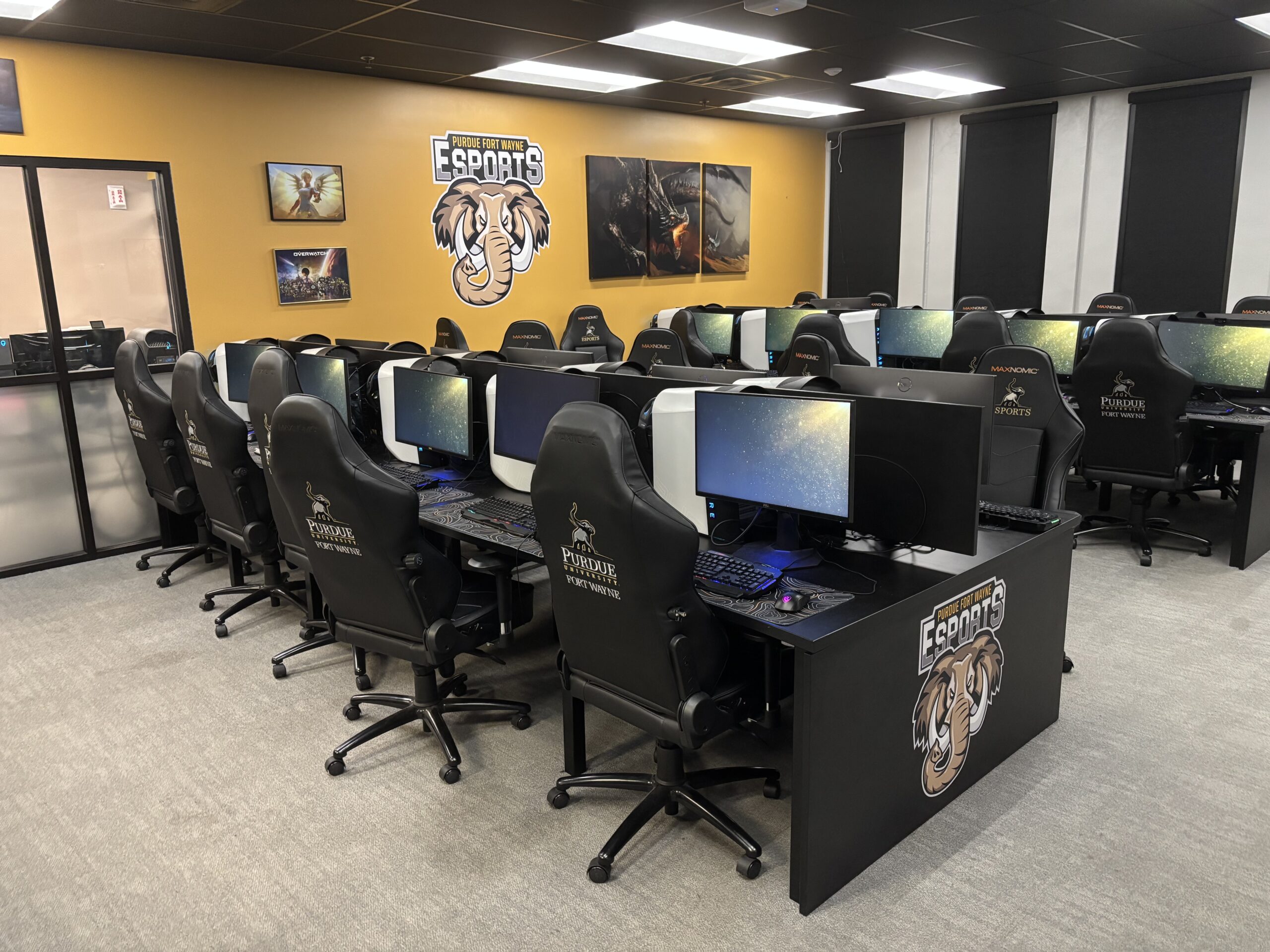
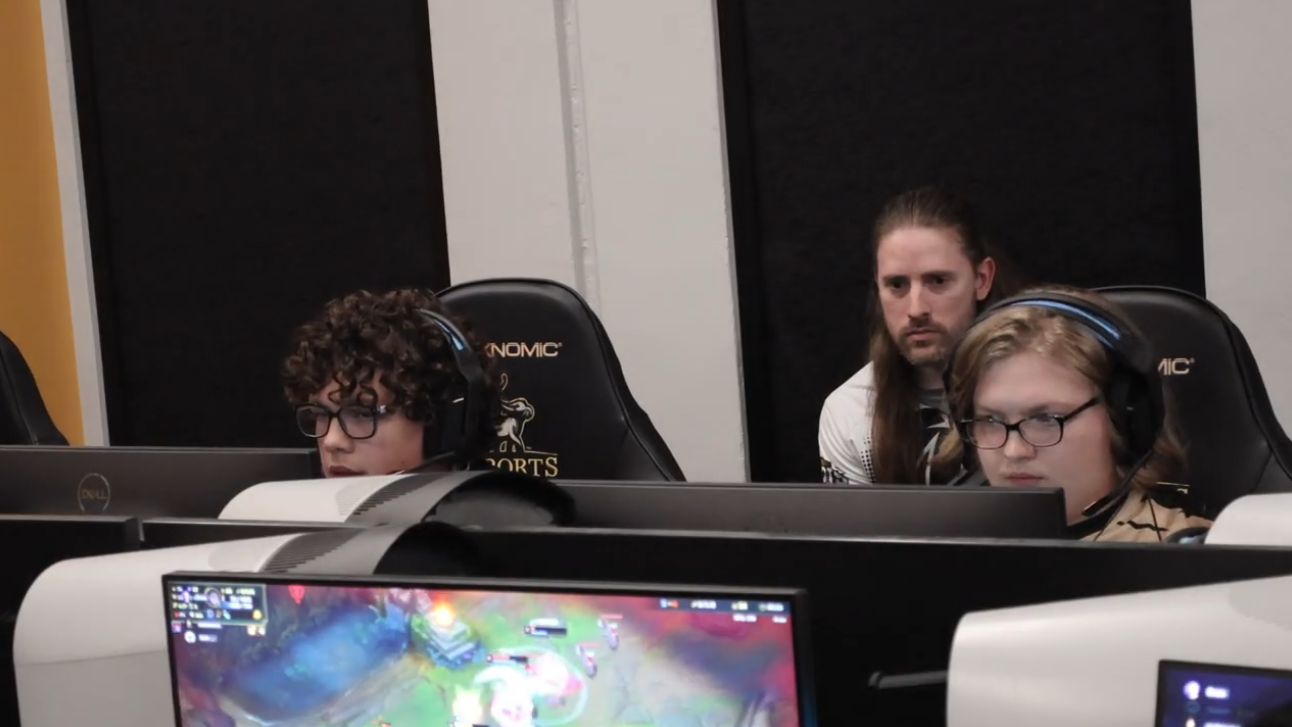
For some students, the chance to play Esports at the collegiate level while working toward a degree is a dream opportunity. With a beautiful arena on the second floor of Walsh containing 21 Alienware gaming computers, that dream can easily be made a reality.
Yet another advantage to having an Esports arena is that any student on PFW’s campus may use the gaming computers for free.
According to the Esports webpage on the PFW website, the Esports arena is open from 9 a.m. to 5 p.m. Monday through Friday and is available for faculty, students, and staff.
But beyond the recruitment and gaming opportunities offered by the Esports arena, Cunningham said that the Esports team gives students an outlet to be part of a team atmosphere – an experience they may never have had.
“They get that team experience,” he reflected.
And that team experience, of bonding with one’s comrades and working towards a goal, has paid dividends for the players and the university.
Cunningham said that the Esports team has great retention, with students staying on the team and most students remaining at PFW for their education instead of transferring to other schools.
“My students are awesome,” Cunningham said with a smile. “We’ve had so little academic issues.”
In summarizing what he hopes to accomplish with Esports, Cunningham was candid about his long-term goals.
“We’re all here to help them get through college, have a good experience,” he said. “It’s seeing those life skills and professional skills that you helped them develop at such a pivotal age.”