Climate Policy in a Divided Nation: Why States Take Different Paths

Climate change policy in the United States is anything but consistent. Our policies can be described as fragmented and contradictory, with no real uniform policies linking all the states. This lack of connection is not an accident. It reflects a deeper reality for the United States: while the federal government sets broad environmental standards (or chooses not to set standards), much of the authority over energy, infrastructure, and regulation lies with the states. The result is a country where climate policy is shaped as much by geography and economics as it is by politics.

At the center of this divide is the all too familiar distinction of “red” and “blue” states. These labels, while imperfect and reductive, point to broader governing ideas that influence how states approach climate change. Some states prioritize rapid emissions reductions and regulatory action, while others focus on economic stability, energy independence, and marketdriven solutions. Neither approach exists in a vacuum, and both are shaped by the practical realities each state faces.

“Red, Blue, and Purple” States by Control of State Legislatures. Sourced from CenterForPolitics.org

Of course, as the labels of red and blue would suggest, one of the most significant drivers of these policy differences is political ideology. Over the past several decades, national party platforms have increasingly influenced state-level policy decisions. Democratic leadership has generally supported emissions targets, renewable energy mandates, and participation in climate agreements. Republican leadership has often emphasized skepticism toward regulation, opposition to carbon taxes, and support for domestic energy production.

Public opinion tends to mirror this divide. Surveys consistently show that concern about climate change and support for government intervention vary widely across regions. In some areas, climate change is framed primarily as an environmental and public health issue. In others, it is discussed more as an economic or regulatory question. These differences in framing shape not only policy outcomes, but also the political feasibility of certain solutions.

Needless to say, state economics also plays a decisive role. States that rely heavily on fossil fuel production face a different set of incentives than those with more diversified economies. In energy-producing states like Texas and West Virginia, policies that restrict oil, natural gas, or coal can carry immediate consequences for jobs and tax revenue, which will affect local communities in these areas. By contrast, states with less dependence on these industries may find it easier to adopt aggressive emissions targets or transition toward renewable energy.

State Government Fossil Fuel Revenue. Sourced from Resources for the Future

Even within this divide, the picture is more nuanced than it first appears. Texas, often categorized as a red state, leads the nation in wind energy production. This growth has been driven less by climate-focused mandates and more by favorable geography, existing infrastructure, and market incentives. It serves as a reminder that positive climate outcomes, like expanding renewable energy, can emerge from very different motivations than expected.

Demographic factors further shape how climate policy is experienced and debated. States with large urban populations often face visible environmental challenges such as air pollution, heat islands, and flooding. These conditions can make climate action feel immediate and tangible. In more rural states, concerns may focus on energy costs, agricultural impacts, and land use. It should be noted, though, that some policies, like those perceived to increase fuel or electricity prices, can face almost universally strong resistance, regardless of their environmental intent.

At the core of these differences is a divide over the role of government in addressing climate change. Some states favor regulatory approaches, such as mandating emissions reductions, setting renewable energy standards, and adopting legally binding climate goals. While others emphasize limited intervention, focusing on voluntary action, innovation, and market-driven solutions.

These contrasting philosophies are reflected in areas like transportation policy, where some states are phasing out gasolinepowered vehicles while others resist mandates but still support electric vehicle production for economic reasons. These approaches often extend into the legal system, where states challenge federal climate policies as either too aggressive or too weak, contributing to ongoing uncertainty and shifting policy direction.

However, at the end of the day, we will all feel the effects of climate action or the lack thereof. Some may experience higher upfront costs associated with transitioning to cleaner energy systems, alongside long-term environmental and public health benefits. Others may benefit from lower regulatory burdens and stronger ties to traditional energy industries, while facing a slower shift toward renewable energy and more potential for future climate ramifications.

At the same time, the impacts of climate change itself do not follow political boundaries. Extreme weather, shifting growing seasons, flooding, and heat waves affect communities across the country, regardless of how their states approach policy. This shared vulnerability exists alongside deeply different strategies for addressing it.

Climate change will ultimately affect all communities, regardless of how policy is divided today. While state-by-state approaches may seem workable in the short term, the longterm consequences of inaction will extend across the entire country. The United States may not yet be politically aligned for a unified national response, with a government largely against climate action, but the need for broader dialogue is becoming increasingly difficult to ignore. Climate policy is not a simple binary choice; it reflects a complex balance of economic priorities, political beliefs, and regional realities. As pressures from climate impacts grow, the push for a more coordinated and forward-looking approach will only become more urgent.

Review: Marvel Television’s Wonder Man, a Fascinating Stroll Through Marvel’s Hollywood Boulevard

By Elijah Noggle, SCO Cultural Critic

On January 27, the newest TV series in the long running Marvel Cinematic Universe released all eight of its episodes, and I am really excited to share my thoughts on it. Wonder Man stars Yahya Abdul Mateen II as Simon Williams, a struggling actor in the MCU’s version of Hollywood/Los Angeles, who has powers but must keep them a secret for the sake of his career. He learns that esteemed director Von Kovack is doing a remake of the 1980s cult classic Wonder Man, and sees this as the opportunity of a lifetime. He is accompanied by veteran actor Trevor Slattery, a returning character first introduced all the way back in 2013’s Iron Man 3.

This is easily one of the most unique MCU series to date. It was such a pleasant surprise! My favorite Marvel projects tend to be the ones that feel different compared to everything else. For example, WandaVision was a tribute to television sitcoms, and Werewolf By Night was an homage to 1930s monster movies.

And Wonder Man is another one of those for me. It’s essentially a love letter to Hollywood, taking place in the MCU’s version of the famous capital of American cinema. There are several references to real life actors and real life movies, making this version of Los Angeles feel more like the real life one, only that it just so happens to be in a world where superheroes exist.

One of the strongest aspects of this series is the character writing. Simon Williams is a very compelling character. He’s also flawed in a way that makes him relatable. For example, something you see a lot in the series is that he sometimes has trouble trusting others. It feels like a consistent theme in the series. Also, I found Trevor compelling in this series because he truly does care about the art of acting, but at the same time has to deal with his past playing The Mandarin, a literal terrorist on live television. Furthermore, Yahya Abdul Mateen II and the great Sir Ben Kingsley are at the top of their game in these roles.

The writing in this series overall has a really genuine sincerity and earnestness to it. These characters’ struggles in the world of Hollywood feel very real. It doesn’t rely on the same type of quippy humor that Marvel movies and shows have been known for in the past- it instead chooses to mostly focus on the emotional beats and the characters, which works in its favor. Whenever there was humor, for the most part it felt natural to me.

The most noticeable flaw in this series is the pacing. Multiple times in this season, there were episodes that felt like they didn’t quite advance the plot as much as they could have. This results in some plot points not feeling quite as fleshed out as they could. Without directly spoiling anything, episodes 2, 4, and 5 exemplify this quite a bit. Episodes where it feels like the characters go on a “side quest” of sorts.

I just have to mention though (without spoilers) that even though episode 4 titled “Doorman” does grind the pacing to a halt, this one-off episode focusing on an entirely different character ended up being one of my favorite episodes of the entire series. It really showcased this show’s artistic vision and willingness to take risks.

The show’s visual look and cinematography feel very in line with this show’s identity of being about Hollywood and the experience of a struggling actor. Someone online mentioned that it felt like an A24 production, and I couldn’t agree more. Tonally, I love how different it felt to me compared to many of the marvel projects I’ve watched in the past few years.

Wonder Man was a really enjoyable watch. It’s got a couple of small issues I think could be ironed out if this received a second season. But overall, the amount of heart present in this season of TV really elevated it for me. It was very focused in what it wanted to say about Hollywood, the experience of acting and what goes into making a movie, and even superheroes. I would give this an 8.5 out of 10. I think you can really enjoy this even if you have never seen any MCU film or series, so I heavily recommend it.

Students Rally in Indianapolis to Support Immigrant Communities, Challenge ICE Practices

By Caeden McConnell

INDIANAPOLIS – Students around the state of Indiana gathered at Monument Circle in Indianapolis on Feb. 13 to protest Immigration and Customs Enforcement.

The event, Students Against ICE, was organized by a 17-year-old high school student from Indianapolis who is an immigrant. About 40 to 50 students attended, holding signs and chanting.

During the protest, the student organizer delivered a speech explaining her motivation. She described being picked on by her classmates for being born in another country before moving to Indianapolis. 

This dehumanizing behavior she experienced as a kid, she said, motivated her to advocate for herself and others with similar experiences. The Students Against Ice protest grew directly out of that desire.

One of the speakers was Stephen Lang, a member of the Party for Socialism and Liberation.

“It is important for students to stand up for their first amendment rights,” Lang said.

Lang, who comes from a predominantly Black and Latino community in Indianapolis, pointed out the compassion of his immigrant neighbors. When he was sick, he said, many of them helped him and even brought him groceries without being asked. Lang said he would like to see his great immigrant neighbors stay in his neighborhood.

One protester, Jeremy, attended the event with his wife and child, holding a sign featuring a crossed-out swastika.

“I have a certain vision I would like to see,” Jeremy said. “One including freedom, democracy, a healthy nation in which people live freely and take care of their community.”

However, what Jeremy is now seeing is far different.

“Oppression, fascism, people being detained and arrested without due process, people being harmed, beaten, killed, for seemingly no reason,” Jeremy said.

He added that what he is seeing is hurtful and scary, and that he hopes for change.

No members of the Department of Homeland Security or ICE were present at the protest. However, several police officers blocked nearby streets to allow protesters to assemble safely. Attempts to interview DHS officials before the event were unsuccessful, with multiple contacts referring inquiries elsewhere. Emails sent to DHS received no response.

A photographer present at the protest, Chris, a second-generation American, said he attended out of concern for himself, his family and his community. 

Chris found out about the protest from a social media post. He said that many people in his family and community come from another country, and he wants to see them stay where they are now living.

Chris simply asked that ICE have more empathy and that more people become aware of the situation. He understands that the immigrant issue doesn’t affect every American, but almost everybody knows a person that could be profiled based on the color of their skin, or how they look.

Lang, Chris and Jeremy shared a similar message when asked what they would like to say directly to an ICE agent:

“I would tell them to quit their job,” Lang said.

“Quit, put your gun down, go home and apologize to your spouse,” Jeremy stated.

“Just got to calm the f*** down man, there is no reason to be doing all this,” Chris said.

Many protestors at the event had such strong emotion over the issue. In one way or another, the issue has affected them personally. Through chanting, speeches, holding signs, and the honking of passing cars, the event reflected that this community can really come together as one.

Fort Wayne Students Protest Amid Growing Concerns Over ICE Actions

By Max Nordman

As of 2026, Immigration and Customs Enforcement operations have reached an all-time high, sparking a series of protests nationwide and taking an effect on education systems, including some of the schools of Fort Wayne, Indiana.

Tasiana Neer, a student at Wayne High School, expressed her concerns regarding recent political events and ICE’s actions.

“It scares me to know that they have been approaching schools where minors attend in an attempt to deport people,” she mentioned.

Those concerns are shared by other students and faculty members in area schools.

Starting in February, students and staff at local FWCS schools in Indiana joined together for weeks of walkouts, protests, and other events to speak out against the perceived harm and violence perpetrated by ICE.

 Some schools involved in the recent protests include South Side High School and Wayne High School.

On Feb. 7, the students at South Side formed a walk out. The protest quickly sparked a pattern amongst the other schools in the district.

At Wayne High School, students and staff held their own protest on Feb. 12. They walked out of their classes and onto the baseball field closest to the school, and shared concerns about the work and possible risks they faced when discussing political issues.

“We didn’t think we would get approval honestly,” said Chloe Ruckman, a senior at Wayne. “It was surprising that our principal agreed to it.”

According to Ruckman, it was difficult to pinpoint who had started the initial protest idea. Many of the students had claimed that social media posts started circulating after South Side’s protest on Feb. 2.

The first social media post, dated Feb. 3, was posted by an anonymous Instagram account and suggested a walkout at Wayne High School. Different posts involving plans, routes, sign ideas, and staff involvement all came into fruition soon after.

Several students were caught off guard by the number of teachers and adults who wanted to be involved with the protest. But a large group of students also found that they themselves did not care about political matters, and just wanted an excuse to skip school for the rest of the day instead.

“You know it’s crazy when the students do something about it,” said Aaron Rehrer, a teacher at Wayne. “I’ve been working here for years, and I don’t think we’ve ever had a walkout like this.”

Their efforts strive to hold the ICE administration accountable for the perceived misuse of power within the nation since the 2024 election. More than ever people have increased concerns of being at risk of injury, murder, deportation, kidnap, assault, and more from ICE.

Certain groups in society have banded together to fight against ICE’s actions and bring back the meaning of justice and equality as a community.

Due to careful planning and the help of the staff members at these local schools, there have been no reported incidents of any injuries or violence taking place during these peaceful protests in the FWCS district. Additionally, FWCS mentioned that all five high schools in the district have met together for discussions about these matters of concern.

 Neer, the Wayne student, discussed the community building these protests have had on the schools. She expressed that much of the administration had worked with the students to help them in their efforts.

“I’m glad so many people are protesting lately,” she said. “Especially now when it’s actually getting serious.”

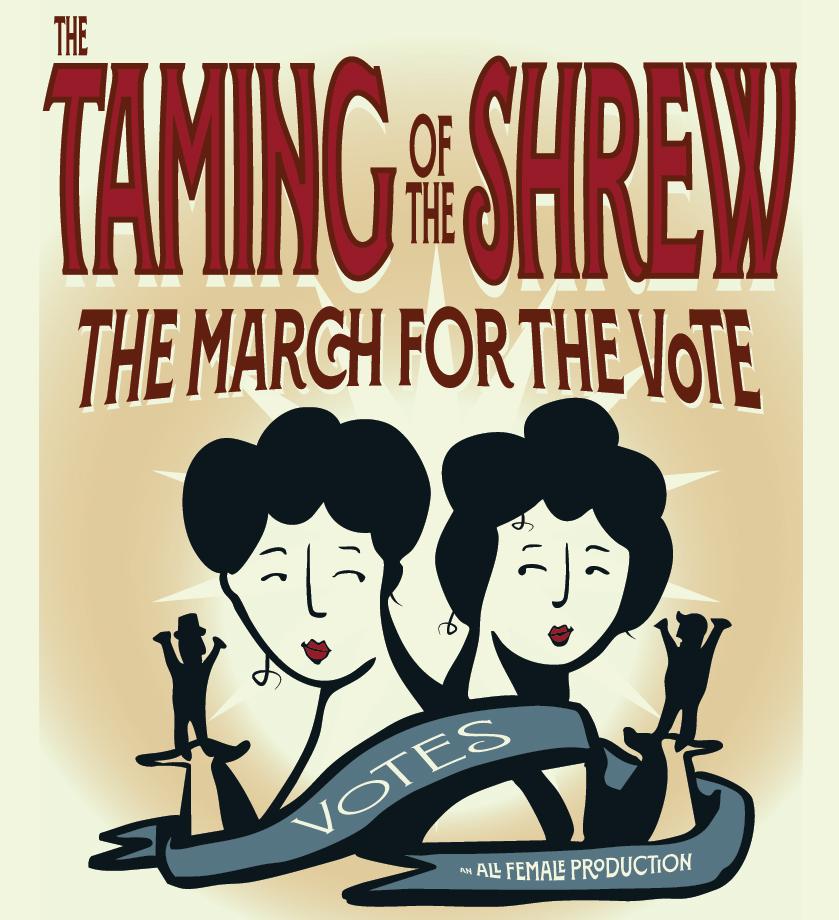
All-Female Cast Brings Suffrage-Era Twist to “The Taming of the Shrew”

By Lilly Crone

An all-female cast transformed Ernest E. Williams Theatre at Purdue University Fort Wayne on Friday night, Feb. 20, with a reimagined version of The Taming of the Shrew.

The Taming of the Shrew: The March for the Vote, set against the backdrop of the 1919 women’s suffrage movement in Chicago, blended Shakespeare’s original comedy with a historical framing device that placed the story inside a women’s social club rehearsing the play amid suffrage marches and social change. The layered approach created a performance that felt both classic and strikingly relevant.

The production drew students, faculty, and members of the local community.

In Shakespeare’s original play, suitors compete for the hand of Bianca while her outspoken sister Katherine must marry first. This adaptation reframed that narrative through conversations about women’s rights and autonomy, encouraging audiences to reconsider themes of obedience and gender roles through the lens of 1919.

Tailor Grant, the lead cast member, portrayed Mrs. Victoria Van Dyne, a shy but passionate supporter of women’s suffrage. She also stepped into the role of Petruchio during the Shakespearean portions of the performance, shifting between two sharply contrasting energies on stage.

“Being the lead in this specific performance feels really special to me,” Grant said. “My character, Mrs. Van Dyne, is very shy but passionate about suffrage, which is fun to explore because I’m not shy or quiet. I love that contrast.”

Grant said balancing the dual roles required careful attention to physicality and voice.

“It’s kind of a play within a play,” she said. “I really have to think about my body language and my voice and everything when I’m doing all of the acting for it.”

Throughout the performance, that contrast was evident. Grant transitioned from the reserved, thoughtful presence of Mrs. Van Dyne to the bold, commanding energy of Petruchio, reinforcing the production’s layered storytelling.

The cast spent approximately seven weeks preparing for the show. For Grant, the production marked her first experience performing Shakespeare.

“We started the process by learning how to read and perform Shakespeare because this is my first Shakespeare performance,” she said. “We broke down scenes and worked through them together.”

Rehearsals often extended late into the evening as the cast ran full performances. Grant described the process as demanding but rewarding.

“It’s a very big commitment, but it’s definitely paid off over time,” she said.

The suffrage-era setting added historical weight to the production. While Shakespeare’s original play has long sparked debate over its portrayal of women, the 1919 framing encouraged audiences to reflect on women’s political and social limitations during that period. The 19th Amendment, which granted women the right to vote nationally, would not be ratified until 1920.

Grant said she believes the themes remain relevant today.

“It’s about women finding their voices and standing up for what they believe in,” she said. “That definitely still resonates.”

As the curtain closed Friday night, the production left audiences entertained yet reflective, reconsidering a centuries-old comedy through the lens of women’s ongoing fight for equality.