Environmental Disinformation Poses Growing Threat

By Cincade Drudge

Part of the challenge of protecting our planet today is not just the very real effects of the changing climate itself, but the flood of false and misleading information regarding it. 

Environmental disinformation, which is the intentional effort to mislead the public about environmental issues, has become one of the biggest barriers to meaningful action. It often comes from industries or political actors with a financial stake in delaying change. 

Climate misinformation has surged in recent years, with multiple studies showing that misleading posts from unreliable sources often attract two to three times more engagement than accurate information on platforms like Facebook and Instagram. 

We’ve seen this playbook of purposeful falsehoods before. Tobacco companies once funded doubt about the dangers of smoking, delaying public health reforms and costing countless lives. 

Take the myth ​of plastic recycling. For decades, the plastics industry​ ​has promoted recycling as a solution to environmental damage caused by plastic waste​, even though only about 5% of plastic in the U.S. is actually recycled.

The result? People blame themselves for not recycling enough instead of asking why so much single-use plastic is produced in the first place. 

Or consider “clean coal.” Despite the name, coal remains one of the dirtiest energy sources on Earth, responsible for air pollution and millions of dollars in public health costs. Marketing it as “clean” allows companies to appear responsible while avoiding meaningful reform. 

Perhaps most crucially, the fossil fuel industry has taken this same strategy to a global scale, using misinformation to question the reality of climate change and the science behind it. The goal is the same across industries: to confuse, divide, and stall progress. 

Why should you care? Because disinformation doesn’t only distort the debate around climate change, it changes real material outcomes. When the public is unsure what to believe, it’s easier for policymakers to do nothing.  

Every year that passes without decisive climate action adds to the cost, environmentally, economically, and socially. Before long, we will find ourselves in a world of hurt, with a destroyed climate and a population too steeped in disinformation to do anything about it. 

These stories are not isolated; they form a pattern of deception that benefits a few while harming many. And now, with social media, this misinformation spreads faster than ever.  

Influencers, podcasts, and partisan outlets amplify misleading claims, often without fact-checking or accountability. Consider this: eight of the top 10 online shows are spreading climate misinformation.  

So what can be done? Transparency would be a start. When corporations, politicians, and media outlets are required to disclose who funds their messages, the public can make informed decisions about credibility.  

Media literacy is another key step: teaching people how to recognize biased sources and understand how scientific consensus is built. 

This scientific consensus concept leads to another important point: Scientists, too, must meet the public halfway by communicating clearly and openly, without the technical jargon that can alienate audiences.  

The need for scientific clarity doesn’t erase the blame we as individuals face. We must take steps (no matter how small) toward reaching climate accuracy via verifying info before sharing, supporting credible journalism, and challenging falsehoods when we see them. 

The battle for truth is part of the fight for a livable planet. If we allow disinformation to shape public understanding, the consequences will be very real.  

Take voting, for example; U.S. voters’ opinion on climate change has been found to have swayed enough voters in 2020 to account for a 3% swing in the popular vote. This shift, if reversed by disinformation, could have switched the winner of the presidential election, dramatically shifting U.S. Climate policy.  

This shows that holding powerful actors accountable and demanding honesty in environmental communication isn’t optional; it’s vital to securing a bright future for both us and hopefully those long after us. We can’t allow misinformation to affect the outcomes of our elections, our policies, or our future.  

If you encounter misleading environmental claims or wish to learn how to identify them, consider using resources such as Science Feedback, Media Bias/Fact Check, and Hot Air, each of which provides accessible tools for fact-checking and misinformation reporting. 

We all have a role in protecting not just our environment, but the truth that helps us defend it. 

Cincade Drudge is a student journalist at Purdue University Fort Wayne and a Waterfield Environmental Intern at the Environmental Resources Center on campus. 
PFW School of Music Expands Opportunities with Surack-Sweetwater Music Industry Building

By Andrew Danielson

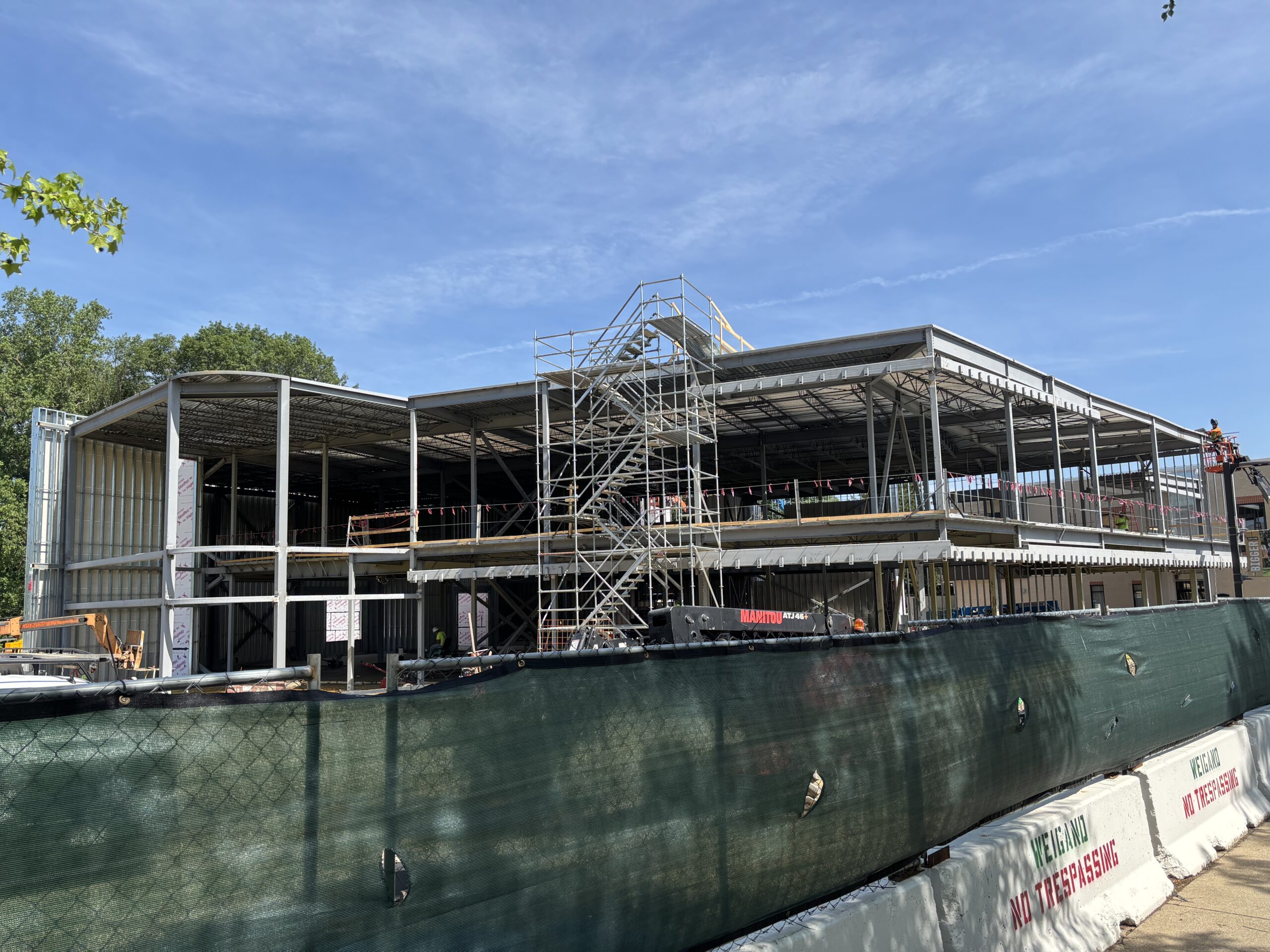
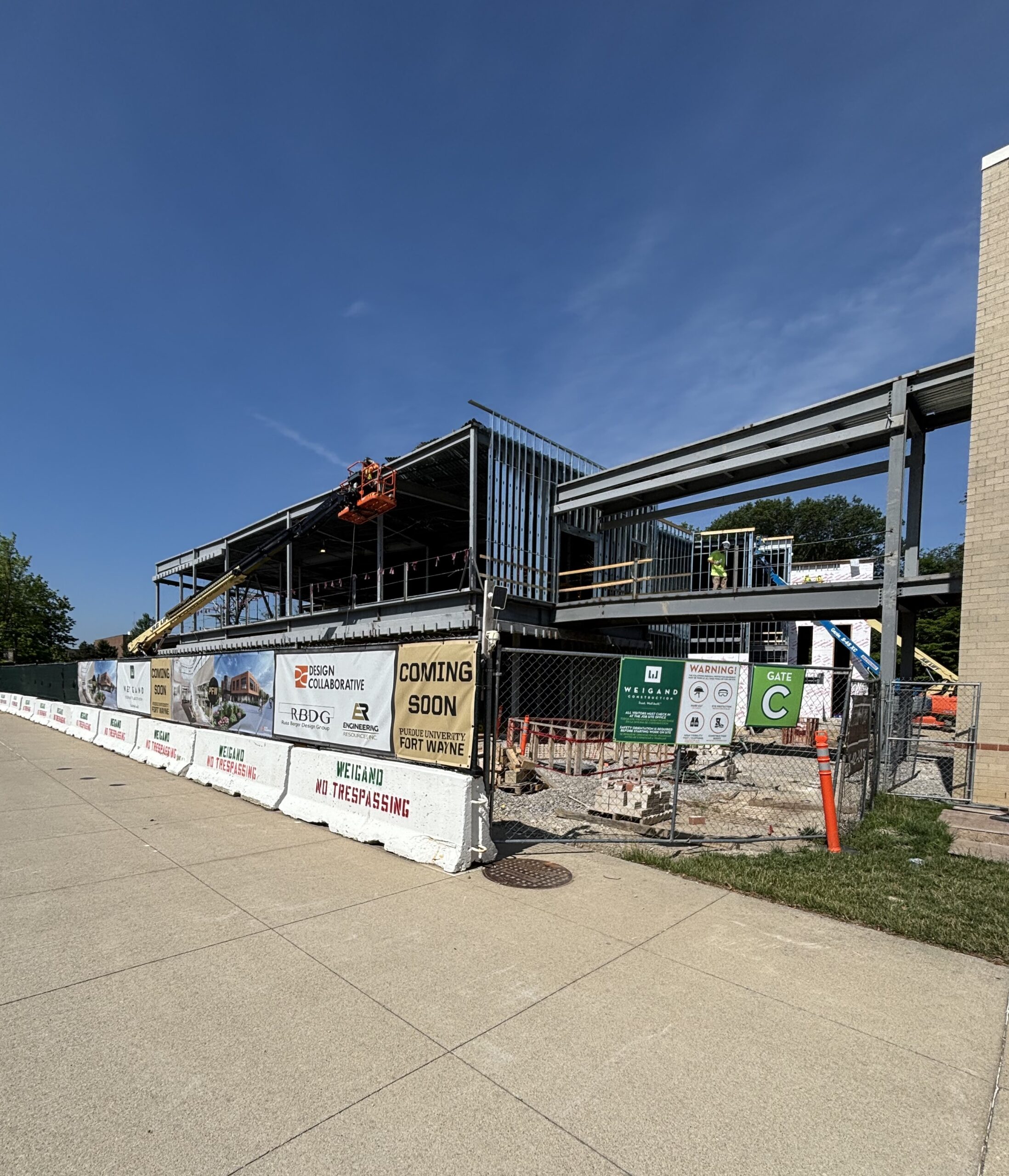
2026. That is the year the new Surack-Sweetwater Music Industry Building is set to open.

At a cost of $25 million, the new building will house state-of-the art equipment and world-class facilities, offering students attending the PFW School of Music the chance to learn and study music making at a whole new level.

The new construction will be a staggering 26,000 square feet interconnected to the current Music Center via a skybridge. Packed into that space will be all kinds of technology designed for today’s commercial music needs.

Dr. John Buteyn, clinical assistant professor of music and director of popular music at PFW, said that the new building will contain three state-of-the art recording studios, analog and digital control consoles, and systems for surround and immersive audio.

The recording studios alone are high-end facilities, designed by the same engineers who planned the recording studios at Sweetwater, Russ Berger Design Group.

Dr. Jeremy Grall, director of the PFW School of Music, explained that the new facility will also include numerous editing suites, a large rehearsal room for PFW’s larger ensembles, an intimate “live” rehearsal room (which can hold potential live music concerts), a classroom, a conference room, and multiple offices for faculty.

Professor Buteyn explained that with the new building, space, and technology, PFW will have the ability to record in-house their various musical ensembles, stretching in size from their rock bands all the way to their major wind ensembles and orchestra.

The new structure is a testament to the exponential growth experienced by the School of Music.

PFW School of Music and Degree Programs are Born

John O’Connell, dean of the College of Visual and Performing Arts, explained that in the mid-2000s, PFW (then IPFW) offered a music technology concentration for students majoring in music and an outside field.

However, the program was quite small, with only a single room for students to practice their recording abilities and learn about music technology.

In 2018, PFW became its own entity, with their department of music elevated to become a School of Music. With that change came the opportunity to add new degree programs.

O’Connell said that they were looking for new ways to grow, and the fields of music technology and commercial music offered an exciting opportunity for expansion.  

PFW added three new degrees in 2018-2019: music industry, popular music, and music technology.

But degree programs are only as effective as the opportunities they provide.

Thanks to the generosity of Chuck Surack, philanthropist and founder of Sweetwater Sound, PFW formed an agreement with Sweetwater that enabled the School of Music to begin offering new courses for its music majors at a facility on the grounds of Sweetwater called the “Purdue Fort Wayne Sweetwater Music Center” (SMC for short).

That facility contains industry-standard recording spaces and equipment, giving students the chance to learn on current gear used in the commercial music world.

But that was back in 2018.

Professor Buteyn explained that the SMC, though incredible with what it has to offer, has become too small for the growing student body in the school.

In 2018, there were 24 students in PFW’s music industry and commercial music degree programs. By 2019, that number had risen to 80 students, with the program nearly doubling in size to 147 students by 2022.

This growth is highly unusual for academic programs.

“It’s unheard of,” dean O’Connell said. “It’s really spectacular to have that much growth in that short of a time.”

The School of Music now has approximately 300 students, with about 50% of those students coming to PFW specifically for the new opportunities the music industry, music technology, and popular music degree programs offer.

With the growth the School of Music experienced came a welcome but still serious issue – how to host so many students with limited facilities. Class scheduling, and studio/editing time had become a challenge.

“Quite simply, we outgrew the facilities,” director Grall said.

The SMC is less than a third the size of what the new music industry building will be.

A Big Impact on Students and Their Education

One of the first impacts the school of music will experience with the new facility is that students among the various degree programs will get the chance to work together more closely.

Jake Kaufman, a PFW senior majoring in popular music with a focus in performance/song-writing, said that having the music industry building so close to the Music Center will open up collaboration opportunities.

Currently, students must leave the PFW campus and drive to the SMC in order to take their recording classes. They then have to drive back to PFW to take their other music courses.

But with the new building, that commuting will largely be a thing of the past.

“The best part about this is that the building [the new music industry building] is right there,” Kaufman pointed out.

Kaufman believes that the close proximity between the two music buildings will also help reduce perceived barriers between the commercial/pop music programs and the more traditional/conservatory-style programs.

“There seems to be some sort of separation between classical musicians and the commercial musicians,” Kaufman said. “That line need not exist. We are all musicians and we all should be working together.”

Professor Ryan Tilby, clinical assistant professor of recording at PFW, echoes Kaufman’s thoughts.

“Being all in one building is just going to help us realize that we all need to learn something from each other,” Tilby said. “I just want there to be one big community of people helping each other out all the time.”

One example of future collaboration will be the opportunities for commercial music students to practice recording both electrified as well as acoustical instruments.

Director Grall, who plays a variety of instruments, explained that recording acoustical instruments is actually more of a challenge than people might suppose.

With the new music industry building immediately adjacent to the music center, students will now have the opportunity to record a variety of acoustic and electric instruments, all while using world-class recording gear and techniques.

In the midst of all the excitement of the new facility, it’s easy to forget what makes a building spring to life.

“A building is just a place – it’s a thing,” Grall said. “The ‘thing’ that makes this work is the people.”

Grall went on to say that, thanks to the support of dean O’Connell, the professors, and the students, the building will have life and energy.

Kaufman shared that enthusiasm.

“We are definitely excited for it,” Kaufman said.

There are already plans in the works to add new course offerings for future music students at PFW. For now, the Surack-Sweetwater Music Industry Building is a blank canvas of opportunity awaiting the paint brush of creativity.

“The School of Music is going to keep growing,” director Grall said. “But we don’t even know how it’s going to grow yet, because there’s so many options.”

Fever drop to 8th seed after Sunday’s Loss to the Lynx

By Lindsay Burke

The Indiana Fever fell to the Minnesota Lynx for the second time in three days after Sunday night’s 97-84 loss. Kelsey Mitchell led the Fever in scoring yet again finishing with 26 points after going 7-for-12 shooting. It was difficult for the Fever to slow down MVP candidate Napheesa Collier who put up 32 points on the Indiana defense.

The Fever got off to a fast start much like they Friday night at home against the Lynx, but their pace quickly faded in this one. Despite taking another lead into halftime the Lynx came out fast and never looked back. They quickly cut into the Fever’s small lead and took full control of the game leading it the rest of the way.

One of the three hardship contract players for the Fever, Shey Peddy, is finding her comfort zone with her new team after scoring her season high 16 points. She’s been automatic beyond the arc after scoring three straight 3-pointers in her first game with the team. Aliyah Boston and Natasha Howard each added double figures for the Fever. Boston finished with 14 points while Howard added 10.

Aerial Powers had a solid game for the Fever after signing a 7-day hardship contract Saturday due to Sophie Cunningham being out the remainder of the season with an MCL tear. She drained five points and added five rebounds with three assists. It’s unclear what the Fever will do if Caitlin Clark returns before the end of the season. She missed her 15th consecutive game Sunday, but there was a glimmer of hope that she is inching closer to her return after being seen in shootaround prior to their game against Minnesota.

The Fever won’t be able to keep all three hardship contract players if Clark were to return and will have some decisions to make if it happens by the end of the season. Despite their loss to the Lynx, they still find themselves in the middle of a tight playoff race. The loss dropped them from the 6th seed down the 8th seed. The top 8 teams get a playoff bid and the Fever finish the season with the toughest remaining strength of schedule. Their final opponents combine for a winning percentage of .587.

The Fever return home Tuesday night against the Seattle Storm.

Fever Lose Close One to League Leader Minnesota

By Lindsay Burke

The Indiana Fever returned home to Gainbridge Fieldhouse after a week long road trip. The challenge ahead of them seemed like it would be too much given the fact that their roster is so depleted due to injuries. The Fever started the game off fast after three quick 3-point attempts from newly acquired Shey Peddy who quickly showed her comfort with her new team. The Fever were led in scoring by Lexie Hull and Kelsey Mitchell.

The Fever led for much of the entire first half against Minnesota who was without their MVP candidate, Napheesa Collier. After taking a 52-50 lead into halftime, the third quarter woes returned for the Fever. They allowed Minnesota to come back from as many as 11 points down after committing turnovers and missed opportunities. A late fourth quarter push led by Lexie Hull’s career high day, the Lynx walked away with a 95-90 win.

Not being able to close out games has been much of the Fever’s problem. They oftentimes start the game off fast, but lose much of the rhythm coming out of halftime. Kelsey Mitchell has been the team’s most consistent player adding 28 points. But defensively they get sloppy committing turnovers and no longer playing with quick tempo. Shey Peddy fit right into the Fever’s system adding 10 points after Odyssey Sims would exit the game and Chloe Bibby was declared out just after pregame warm ups after feeling pain in her left knee.

The Fever will look to bounce back in a rematch with the Lynx Sunday at 7 p.m on CBS.

Indiana Fever’s Late Efforts Fall Short in Loss to Dallas

By Lindsay Burke

The Indiana Fever’s late heroic comeback came up short in their 81-80 loss at home to the Dallas Wings. Having a short-handed roster showed gaps on the offensive side as the team trailed for much of the game. Sophie Cunningham filled in at point guard shooting 50 percent from the field after draining 14 points including the game tying shot just before the half after the Fever trailed by as many as 15. She’s the spark the Fever needs especially being faced with such a depleted roster. Veteran guard Kelsey Mitchell led the way finishing with 24 points.

Dallas kept swinging after giving up their double digit lead. Maddie Seigrist was their strongest shooter on the night and stepped up in a big way while facing their own injury woes competing without Arike Ogunbowale. She was 9-13 in field goal shooting and finished with 22 points. The Fever just couldn’t keep momentum going after Myisha Hines-Allen took a wraparound pass from Paige Bueckers to give the Wings a 78-61 lead with 6:38 left in the fourth quarter.

A missed free-throw with 14 seconds left in the game gave the Fever plenty of time to drive down the court for a game winning shot after Natasha Howard came down with the rebound. Once the Fever got down on the offensive side of the floor head coach Stephanie White opted to use her reset timeout just as Kelsey Mitchell was getting smothered by the sideline. The inbound ended back up in Mitchell’s hands who was trapped in the corner and put up a shot that landed short as time expired. Natasha Howard added 12 points and dominated in the paint once again with 12 rebounds.

Dallas’ Bueckers finished with 16 points and eight assists to lead her team to a 9-24 record. Their playoff hopes are diminished but can spoiler the rest of the way for potential playoff bound teams. The Fever had several chances to win this one, but put the pressures on themselves by committing 18 turnovers and allowing Dallas to capitalize on all that occurred in the first half.

The Fever look to bounce back at home against the Washington Mystics Friday at 7:30 p.m.

Fever’s Winning Streak Snapped in Third Loss to Sparks

By Lindsay Burke

The Indiana Fever came into Tuesday night’s match up with the Los Angeles Sparks winners of five straight games. Despite knowing the Sparks’ struggles when playing at home this season, The Fever were faced with a tall task. The Sparks like to play tall and fast – things the Fever have had struggles with in slowing down for much of the year.

The Sparks led by as much as 13 at halftime. The Fever just couldn’t get any consistent rhythm going. The Sparks got multiple stops on the defensive end behind Cameron Brink’s solid protection of the rim. She tied her career high with five blocks on the Fever. Kelsey Mitchell was the Fever’s solid offensive piece finishing with 34 points on seven three-point shots made. This performance by Mitchell shouldn’t surprise anyone. After all, she has been the Fever’s most consistent player for most of the season. She also hit her 4,500th career point Tuesday night.

Deep into the fourth quarter, the Fever closed the gap on the Sparks going on an 20-11 run and coming within six points, but time just ran out on them. They struggled in the paint slowing and couldn’t seem to completely shut down the Sparks’ drives. The Fever aren’t quite used to seeing the fast tempo that Los Angeles likes to run which was evident in their first two meetings.

Playoff Hopes are Still Very Much Alive

The loss knocked the Fever to a 17-13 record, but didn’t have an immediate impact on their spot in the standings. In beating Seattle on Sunday, they hold the tiebreaker over them. The Fever currently hold the fifth spot in the standings with the top eight teams clinching the playoffs. There’s still a month left in the regular season, so a lot can still happen. Head coach Stephanie White has her team playing some of their best basketball, but their most recent loss showed some holes in many areas. It very well can be due to travel fatigue as the Fever have been on the road for the last week.

They’re eager to get home to Indianapolis playing in front of their home crowd again. Every game remaining the rest of the way is equally important. A week ago they found themselves going back and forth between sixth and seventh place. No one would have thought that the Fever would be sitting in a fifth place position having been without their top player, Caitlin Clark. Her timetable for return is still very much unclear, although it’s possible she can be activated at the end of August. But if the Fever continue to play well and put some wins together, there shouldn’t be any reason to rush her back in risk of jeopardizing her health.

The Fever return to action Thursday night to wrap up their road trip against the Phoenix Mercury at 10 p.m. EST.

Indiana Fever Look to Build on Five Game Winning Streak

The Indiana Fever will try to avoid a three-game season sweep Tuesday night against the Los Angeles Sparks. Riding a five game winning streak is just what the team needed after facing a rocky start to the season. Head coach Stephanie White’s squad has had to overcome a lot from injuries to players coming and going but now her team seems to be playing as a complete unit despite Caitlin Clark’s absence.

Clark has missed the last seven games, the most of her entire basketball career. Consistency in rhythm is what the Fever have lacked most of the season, but have recently put it all together in just the last week. Several players have stepped up in big ways from All-Stars Aliyah Boston and Kelsey Mitchell to the team’s newest members Sophie Cunningham and Natasha Howard. However, the Fever go into the second game of their west coast trip facing the Los Angeles Sparks, who have beaten the Fever in both meetings this season.

Both Mitchell and Boston are averaging 16.0 points a game while Cunningham is shooting almost 50 percent from the field. Newcomer Aari McDonald has made some noise for the Fever as well. She plays fast off the ball creating nightmare scenarios for defenses to keep up with.

The Fever have beaten good teams this season, but the tempo that the Sparks play at has created some problems for them. Kelsey Plum is a sharp shooter that the Fever have struggled with shutting down in both match-ups and to add to it, the Sparks will have a healthy Cameron Brink back in the lineup. One thing playing into the Fever’s advantage is the Sparks have struggled to win at home all season – a 3-9 record when playing at Crypto.com Arena. Another positive factor is the Fever themselves have had solid shooting and have cracked down on the defensive side of the ball. With no timetable yet for Clark’s return, the Fever hope to continue the momentum before heading back to Gainbridge Fieldhouse this weekend.

They face the Sparks tonight at 10 p.m. EST on CBS Sports Network.

Ciao! PFW Musicians Teach and Study at Italian Music Festival

By Andrew Danielson

It has been a busy summer for musician Mastodons, and earlier this month was no exception. From July 1 to 13, a group of former and current students traveled to Italy with Dr. Hamilton Tescarollo to attend the InterHarmony International Music Festival.

Dr. Tescarollo, director of Keyboard Studies at Purdue University Fort Wayne School of Music, served as a faculty member and guest instructor at the first of two sessions of the festival.

Located in Acqui Terme, Piedmont, Italy, the event is an intensive music camp where musicians from across the globe get the chance to play and study music with their international colleagues.

From Left: Christian Urizar, Olivia Bressler, Ben Morton (IU), Dr. Hamilton Tescarollo, and Allyn Beifus (Photos Courtesy: Dr. Tescarollo)

According to the festival organizers, cellist and current music director Misha Quint started what would become the InterHarmony Festival in 1997. In 2000, a name change was made and the InterHarmony International Music Festival came into being.

This year’s festival was held in Italy, but the location varies depending on the year. The festival’s website mentions other host countries as locations for previous camps, including the United States, The Netherlands, and Switzerland.

For Tescarollo, this year’s InterHarmony was his first time going to the camp.

He explained that he knew some of the camp faculty and had indicated interest in possibly attending the festival. When an invitation came to serve as a guest piano instructor for the camp, he jumped at the chance.

Tescarollo said his duties at the camp included teaching private piano lessons and instructing chamber music classes, as well as performing on the piano himself.

Tescarollo pointed out that the location of the festival gave students a unique opportunity to not only study music, but also to experience a new culture and new surroundings.

The town in which the camp was held, Acqui Terme, which means “Thermal Waters,” has been a site of relaxation and culture since the time of the Romans. Located just two hours away from Milan, students had the opportunity to go on excursions and see the historic and culinary heritage Italy has to offer.

Joining Tescarollo in this international musical venture were four of his former and current piano students.

One PFW Mastodon who went on the trip was Allyn Beifus, a pianist and graduate of the School of Music.

She said one of her goals was to improve as a musician, while also getting to meet new people.

She offered an advice to students considering going abroad to study at an international music festival: “You will experience a trip of a lifetime at a place outside the country, experience the culture, and develop musicianship with the people around you that are participating in this event as well,” she said.

That spirit of excitement and curiosity to learn and study is what Tescarollo hopes students experience with international music festivals like InterHarmony.

He said the camp provided students with some amazing opportunities to learn and study music in an international setting.

“Basically, expand horizons and meet new people and make connections,” Tescarollo said.

Inside the PFW Surplus Store: Reuse, Resale, and Resourcefulness

By Andrew Danielson

Rows of chairs, desks and filing cabinets are arranged in perfect order inside the spacious, well-lit room. One corner holds computers and monitors; the opposite wall supports a stack of flat-screen TVs.

There’s a quiet sense of anticipation in the room, as if the objects are waiting for new homes.

Welcome to the Purdue Fort Wayne surplus store.

Located at 5190 St. Joe Road in Ginsberg Hall, the store is a hidden gem on campus — a hub for reuse, sustainability and community service.

“We handle all the surplus in Purdue Fort Wayne circulation,” said TJ Swihart, surplus property coordinator.

Swihart, a 2025 PFW graduate in criminal justice, volunteered at the surplus store as a student before taking on his current role last year. His department manages the collection, sorting and redistribution of university surplus — deciding what gets resold, recycled or discarded.

Swihart explained that the goal of the surplus store is to act as a resource for both the PFW campus and the greater Fort Wayne community.

Items no longer needed on campus are collected and brought to the PFW warehouse — located in the same building as the store — where they’re evaluated. Usable items are offered for sale or repurposed for on-campus use. Anything that can’t be reused is recycled or discarded.

The range of items is vast.

“Anything that’s not just your generic trash,” Swihart said, describing surplus that includes everything from computers and projectors to office furniture and televisions. “The most consistent item, I would say, is the computers.”

Many of the computers come from the university’s IT department and are reset to factory settings before being sold at a steep discount.

The store is typically open to the public once a month, from 8:30 a.m. to 3:30 p.m. Swihart said customer turnout depends on the inventory, especially high-demand items.

“Apple products are a huge deal,” he said with a chuckle, recalling a sale where about 30 customers lined up for Mac devices.

On an average public sale day, the store sees 80 to 100 shoppers.

But the surplus store also serves internal campus needs. Academic departments can request items for free, such as desks, chairs or electronics.

“It’s not just about selling to the public,” Swihart said. “It’s about storing items for reuse around campus.”

That reuse supports both the university’s budget and its sustainability goals.

“That’s our big thing – being sustainable,” Swihart said.

In addition to in-store sales, the department lists select surplus items on GovDeals.com, an online auction site for government surplus. Specialty or large items — like vehicles — are typically sold there.

One recent success: the sale of a 2001 Chevy Tahoe, maintained by PFW staff and sold for more than $4,000.

The surplus store is part of a broader department that also includes mail services and print operations. The team handles internal moves, mail delivery and more.

Swihart said what makes the work meaningful is seeing objects get reused that many people might think have outworn their useful life. It is the chance to keep items in circulation and out of the landfill.

“I like to try to make the world a better place,” he said. “Being part of a sustainability program is nice.”

The store also partners with nonprofits. Past collaborations have included food drives with Ronald McDonald House Charities. This month, the store is working with Blue Jacket, Inc., a local nonprofit that helps people with barriers to employment.

As part of the July 18 public sale, shoppers can receive a discount by donating professional clothing, such as a sport coat or dress shirt, to support Blue Jacket’s mission.

Whether providing free furniture to campus departments, steep discounts to students or support to nonprofits, the surplus store is helping extend the life of useful goods — and making PFW and the surrounding area a better, more sustainable place for everyone.

Summer Chorus Sings a Song of Joy

By Andrew Danielson

The Purdue Fort Wayne School of Music has been bustling with activity this summer. Music camps have been in full swing, with opportunities available for musicians of all skill levels and interests.

But this month, PFW is offering a different kind of musical experience. On July 18-19, the School of Music will host Mastodon alumni for the fifth annual Purdue Fort Wayne Alumni and Friends Summer Chorus.

For chorus director William Sauerland, the event is a wonderful opportunity to build community and joy through singing.

“In part, this alumni choir is about creating a culture of care and community,” Sauerland said.

Sauerland, assistant professor of music and director of choral studies at PFW, began his position in 2019. Soon after, Sauerland conceived the idea of starting a summer chorus that would invite music graduates from the School of Music to return for a few days of choral training and singing. The summer chorus was launched in 2020.  

Starting a choral experience during a global pandemic, however, was no easy task. Sauerland recalled the many precautions taken to ensure participants’ safety.

Before attending, participants were required to test themselves for COVID-19. During the event, they wore masks and were spaced eight feet apart in a large auditorium.

That first summer chorus drew roughly 30 participants and lasted for three days. The response was so enthusiastic that organizers decided to bring the event back the following year.

Now entering its fifth year, the summer chorus has seen new additions and changes that add variety and broaden its appeal.

PFW alumni return to sing, connect and inspire

One new tradition implemented by Sauerland is inviting a guest conductor to co-lead the ensemble. Last year, William Skoog, a former director of choral studies at PFW (then IPFW), joined Sauerland on the podium.

This year, a PFW alumnus Dan Borns will serve as guest conductor. A 2001 graduate of IPFW with a degree in choral music education, Borns currently works as a choir director for k-12 students in Batesville, Indiana.

Borns said enjoyed returning as a participant in the 2024 summer chorus.

“I hadn’t seen some of those people in 20 years,” Borns said. “That’s special.”

But Borns isn’t the only alum participating in this year’s chorus.

Teaching at PFW since 2008, Peggy Farlow is a senior lecturer in music therapy at the PFW School of Music. She’s also a proud Mastodon, having received her undergraduate degree in music therapy at IPFW.

She said that one of the great joys of the event is the opportunity to meet both old and new friends.

“You’re going to meet new friends,” Farlow said. “It’s amazing how much you end up having in common with people you’ve never met before.”

This will be her third time as a participant with the choir, and Farlow said she highly enjoys the musical and social experiences the choir has to offer.

That sense of community and just enjoying the entire experience is one of Sauerland’s goals for the summer chorus.

“We just have fun,” Sauerland said.

Although the chorus is centered around fun and connection with a community of Mastodons, there are also ambitious musical goals for the group.

Sauerland said he and Borns have selected six pieces of repertoire for the choir to learn over the two-day event. The lineup includes works such as “Big Yellow Taxi” by Joni Mitchell and “Elijah Rock,” arranged by Moses Hogan.

Singers prep for two-day musical challenge at PFW

Sauerland explained that there is a process for learning and preparing the repertoire in such a short time.

A few weeks before the event, Sauerland emails participants PDFs of the sheet music and audio links to recordings. This gives singers a head start on learning their parts ahead of the first rehearsal.

When the event begins on Friday afternoon, the choir will sing through all six pieces, accompanied on piano by PFW faculty member and limited term lecturer Geoffrey North.

After the initial read-through, Sauerland and Borns will decide how to structure Saturday’s rehearsal schedule.

On Saturday, the choir reconvenes for a fun-filled day of rehearsing and socializing, with both directors offering singing tips and feedback. That evening, the weekend wraps us with an informal concert, showcasing the music the group has learned.

Beyond the music, the weekend offers time for participants to reconnect and socialize. Saturday includes a lunch break and, after the rehearsal and concert, an optional group dinner.

Teachers become students at summer chorus

Sauerland noted that the summer chorus provides a unique opportunity for professional choir teachers and vocalists to experience music-making from the singer’s perspective, rather than from the conductor’s podium.

“This may be the one time in a year that those people can devote to being in the choir,” he said.

He added that, from his own experience as a choral director, getting the chance to be a vocalist in a choir is a great opportunity to observe and learn new approaches from other choral conductors.

“Everybody needs an experience where they’re in the seat of being a student,” he said.

Other music professionals agree. Alumna and music educator Lisa Farlow said the summer chorus is an opportunity to be a singer and musician, instead of serving as the teacher.

“It’s just a great way to be able to use your music skills,” she said.

In just a few weeks, the halls and classrooms of the School of Music will once again be filled with the uplifting sounds of voices raised in song. Both Mastodons and their friends will have a chance to walk through their old “stomping grounds” as they revisit the halls of musical academia.

Borns captured the spirit of this upcoming musical experience:

“Come be part of it and get a chance to sing some good music.”